Bottom line up front: write a warehouse cleaning scope zone by zone: the loading bay, the racking aisles at floor level, the open floor, the office and staff areas, and anything at height. Floor-level cleaning and machine scrubbing are routine work. High racking and roof structures are work at height and need their own plan. Schedule all of it around your operating hours.
TL;DR
- Scope by zone, not by square footage. Each zone in a warehouse gets dirty in a different way.
- Floors: sweep first, then machine scrub, with the chemical matched to the surface. Our guidance for commercial premises is a scrub every three to six months.
- Work at height is a separate line. Singapore's rules treat a possible fall of more than 3 metres as hazardous work at height.
- Clean around operations in planned zones and quiet windows, with forklift-free areas agreed in writing.
- Check the provider's NEA cleaning business licence before you sign.
Why a warehouse is a different job from an office
An office gets dirty from people. A warehouse gets dirty from goods and machines. Cartons and pallets shed dust and fibre. Forklift and pallet-jack wheels leave tyre marks and carry grit from the loading bay into every aisle. And the floor area is so large that a mop only spreads the dirt around.
The other difference is that the building rarely stops. Picking, packing and loading carry on while the cleaning happens, so the scope has to say not only what gets cleaned but where and when the crew works.
What to put in the scope, zone by zone
Use this as a checklist when you compare quotes. If a zone is not written into the scope, assume it will not be cleaned.
| Zone | What to specify |
|---|---|
| Loading bay and dock | Floor sweep and scrub, entrance mats, the bin and waste area, door tracks at floor level |
| Racking aisles | Floor-level sweep and scrub, debris pulled out from under the bottom beam, dusting of the lowest level. State whether stock is moved or cleaned around |
| Open floor and walkways | Sweep, then machine scrub. Keep floor markings and walkway lines clean and visible |
| Mezzanine and stairs | Sweep and mop, handrails and stair nosings wiped |
| Office and admin area | The standard office cleaning scope: desks, floors, glass, bins, high-touch points |
| Pantry, washrooms and lockers | Daily-use areas. Sinks and washrooms descaled, bins cleared, floors mopped |
| High racking, roof structure, high-bay lights | Work at height. A separate line with its own access plan |
| Exterior and façade | A specialist trade, quoted separately |
Two lines are worth adding to any warehouse scope: who moves pallets or stock, if anything is moved at all, and which areas are off limits to the crew, such as cold rooms, bonded areas or hazardous goods storage.
Floors: sweep first, then machine scrub
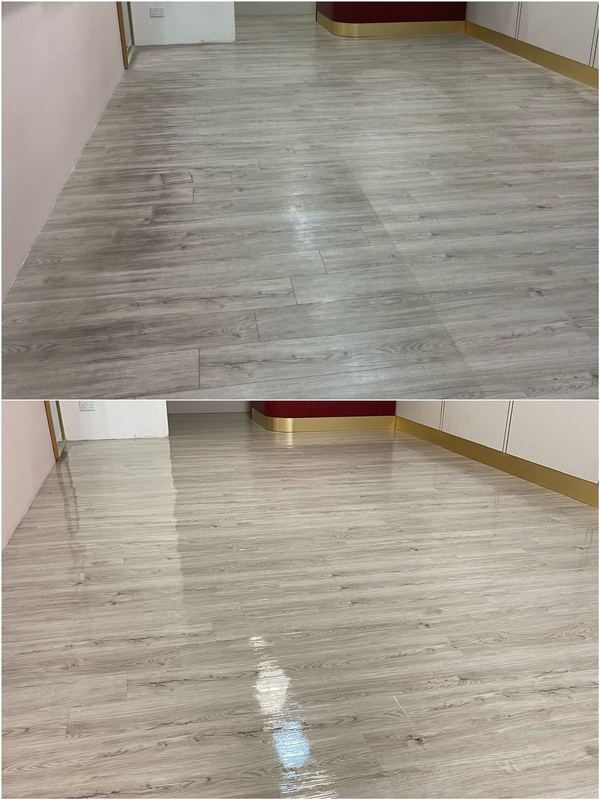
A warehouse floor is cleaned in two passes, and the order matters. Loose grit and dust come off first with a sweep and vacuum. If that step is skipped, the scrubber grinds the grit into the floor under the brush.
The second pass is the machine. Our floor scrubbing service uses an industrial scrubber that injects the chemical, scrubs with rotating brushes and vacuums the dirty water back up in one pass, with an edge tool for corners and tight spots the machine cannot reach. The chemical is matched to the floor: an alkaline degreaser where there is oil and grease, a mild acid for mineral build-up, and a neutral cleaner for epoxy-coated or sealed concrete. The wrong chemical can strip a floor coating or leave a haze. If your floor is bare, unsealed concrete, say so at the walk-through so the method can be checked against the surface.
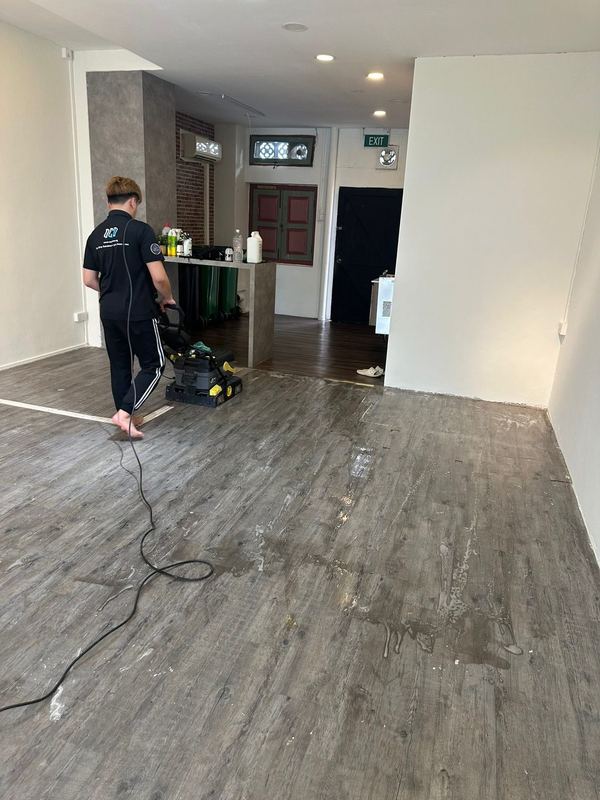
Our guidance for commercial premises is a machine scrub every three to six months, and more often in high-traffic areas such as the loading bay and main walkways. Between scrubs, regular sweeping is what stops the grit from building up again. Our comparison of floor scrubbing vs mopping explains why a mop cannot do the scrubber's job on a large floor.
Work at height is its own plan
Dusting high racking, roof trusses and high-bay lighting is not floor cleaning. Under the Workplace Safety and Health (Work at Heights) Regulations, work where a person could fall more than 3 metres is hazardous work at height. Since 1 May 2014, premises that count as factories under the WSH Act must run a permit-to-work system before that work starts, and the regulations' general provisions, including training, apply to all workplaces.
Many warehouses have racking and roof structures well above that line. Whoever you hire, make work at height a separate line in the quote, and ask how the provider will reach it, who will supervise it and what you need to arrange on your side. Keeping it separate also stops a floor-level price from quietly growing once the crew is on site.
Cleaning around operations
A warehouse can usually be cleaned without stopping work, if the plan is agreed in advance.
- Split the floor into zones and clean them in sequence, so picking and loading carry on elsewhere.
- Use the quiet windows. Nights, weekends and the gap between shifts are the usual slots. OCD's crew works night-time and weekend slots.
- Agree forklift-free areas for the time the crew is working in them.
- Cordon off wet floors until they are dry, especially on walkways and ramps.
- Settle access and security: who opens up, who is on site, and who locks up.
Who needs a licence
Any business offering general cleaning at non-domestic premises, warehouses included, must hold a cleaning business licence from the National Environment Agency before it starts work. Licensing has been mandatory since 2014. NEA publishes a list of licensed cleaning businesses with each one's licence class and expiry date, so you can check a provider before you sign. On the list dated 28 September 2026 there were 1,858 licensed businesses.
The same check applies to the office inside your warehouse. If you are deciding how to run cleaning there day to day, our guide to part-time vs contract office cleaning sets out the options.
Recurring cleaning or a periodic deep clean
Most warehouses need both. Daily or weekly cleaning keeps the office, pantry, washrooms and bins in order and the floor swept. A periodic deep clean brings in the machine scrubber and covers the build-up that routine cleaning leaves behind. A deep clean is also the right booking before an audit, after a fit-out, or when you hand a unit back at the end of a lease. If the occasion is a fit-out, see what post-renovation cleaning covers, because construction dust is cleaned differently.
How to get an accurate warehouse cleaning quote
A warehouse quote should be based on a walk-through, not a per-square-foot guess. Before it, have these ready:
- floor area and floor type, such as epoxy, sealed concrete, tile or vinyl
- a rough layout: racking runs, the loading bay, mezzanines and the office area
- operating hours and the windows when the crew can work
- which zones you want covered, and any areas that are off limits
- the number of washrooms and pantries
- anything at height you want included
We see the space, you tell us what gets missed today, and we send a fixed price with the full scope in writing. Our in-house crew brings the equipment and chemicals. For other customer-facing premises, our guide to retail cleaning covers shops and showrooms.
Figures and sources
- 1,858 businesses were on NEA's list of licensed cleaning businesses dated 28 September 2026. Source: NEA, list of licensed cleaning businesses.
- Licence required for general cleaning at non-domestic premises, mandatory since 2014, with a fine of up to S$10,000 for operating without one. Source: NEA, Cleaning Business Licence.
- More than 3 metres: the fall height that makes work at height hazardous, with a permit-to-work required in factories from 1 May 2014. Source: MOM, Work at Heights (Amendment) Regulations 2014 factsheet.
Frequently asked questions
What does warehouse cleaning include?
A warehouse clean is scoped zone by zone: the loading bay and dock, racking aisles at floor level, the open floor and walkways, mezzanines and stairs, the office and admin area, and the pantry, washrooms and lockers. Floors are swept and then machine scrubbed. High racking, roof structures and the exterior are separate lines in the scope.
How often should a warehouse floor be machine scrubbed?
OCD's guidance for commercial premises is a machine scrub every three to six months, and more often in high-traffic areas such as loading bays and main walkways. Sweeping between scrubs keeps grit from being ground into the floor.
Can warehouse cleaning be done without stopping operations?
Usually, yes. The work is split into zones and scheduled into quiet windows, such as nights, weekends or between shifts, so picking and loading carry on elsewhere. Agree in writing which zones are cleaned when, where forklifts will not run, and how wet floors are cordoned off.
Is cleaning high racking part of a standard warehouse clean?
Treat it as a separate line. Under Singapore's Work at Heights Regulations, work where a person could fall more than 3 metres is hazardous work at height, and premises that count as factories under the WSH Act need a permit-to-work system for it. Ask any provider how they will access high racking and roof structures before you agree the scope.
Does a warehouse cleaning company need an NEA licence?
Yes. A business offering general cleaning at non-domestic premises, which includes warehouses, must hold a cleaning business licence from the National Environment Agency before it starts work. NEA publishes a list of licensed cleaning businesses that you can check.
Get your warehouse cleaning fixed price
Tell us the floor area, floor type and your quiet windows. We walk the site and send a fixed price with the full scope in writing.