Diagnose + map damage
Walk the floor, mark cracks and chips, identify depth of dullness. Decide which grit to start at — light dullness can start at 200, deep scratches need 50.

Diamond-pad system — coarse to fine grit progression that lifts dull, scratched marble back to high gloss. Crack filler for older surfaces. Usually one afternoon per room.



Tell us the floor area and condition (dull / scratched / cracked). Fixed price to your WhatsApp.



A few of our 4.8★ reviews from Singapore homeowners and businesses.
"Responsive to feedback on any missed spots and promptly cleared my concerns. The customer service team was also very responsive and communicated clearly."
Google review
"The admin and sales team were extremely helpful with scheduling, and the crew were thorough and meticulous with a positive attitude throughout. Highly recommended!"
Google review
"As soon as they arrived they did a walkthrough. Thorough and meticulous — I sat and watched them work and can attest to their attention to detail. Highly recommend."
Google review
Not a wax. Not a topical coating. The diamond-pad system physically re-grinds the marble surface and brings the gloss back from the stone itself.
The diamond-pad system works one way only — coarse first, then step down through finer pads. Skip a grit and the previous pad's scratch lines stay in the floor forever.
Walk the floor, mark cracks and chips, identify depth of dullness. Decide which grit to start at — light dullness can start at 200, deep scratches need 50.
50–100 grit removes scratches, etching and surface haze. 200–400 grit flattens the scratch lines that coarse pads leave behind.
800–1500 grit brings satin sheen. 3000+ grit polish pad delivers the high gloss. Each pass uses water as a coolant + slurry carrier.
Crystalliser binds with the marble's calcium content for a harder gloss. Sealer goes on top. Then slurry vacuumed, floor wiped, furniture reset.
Dull, scratched, cracked. Each gets a different sequence in the polishing pass.

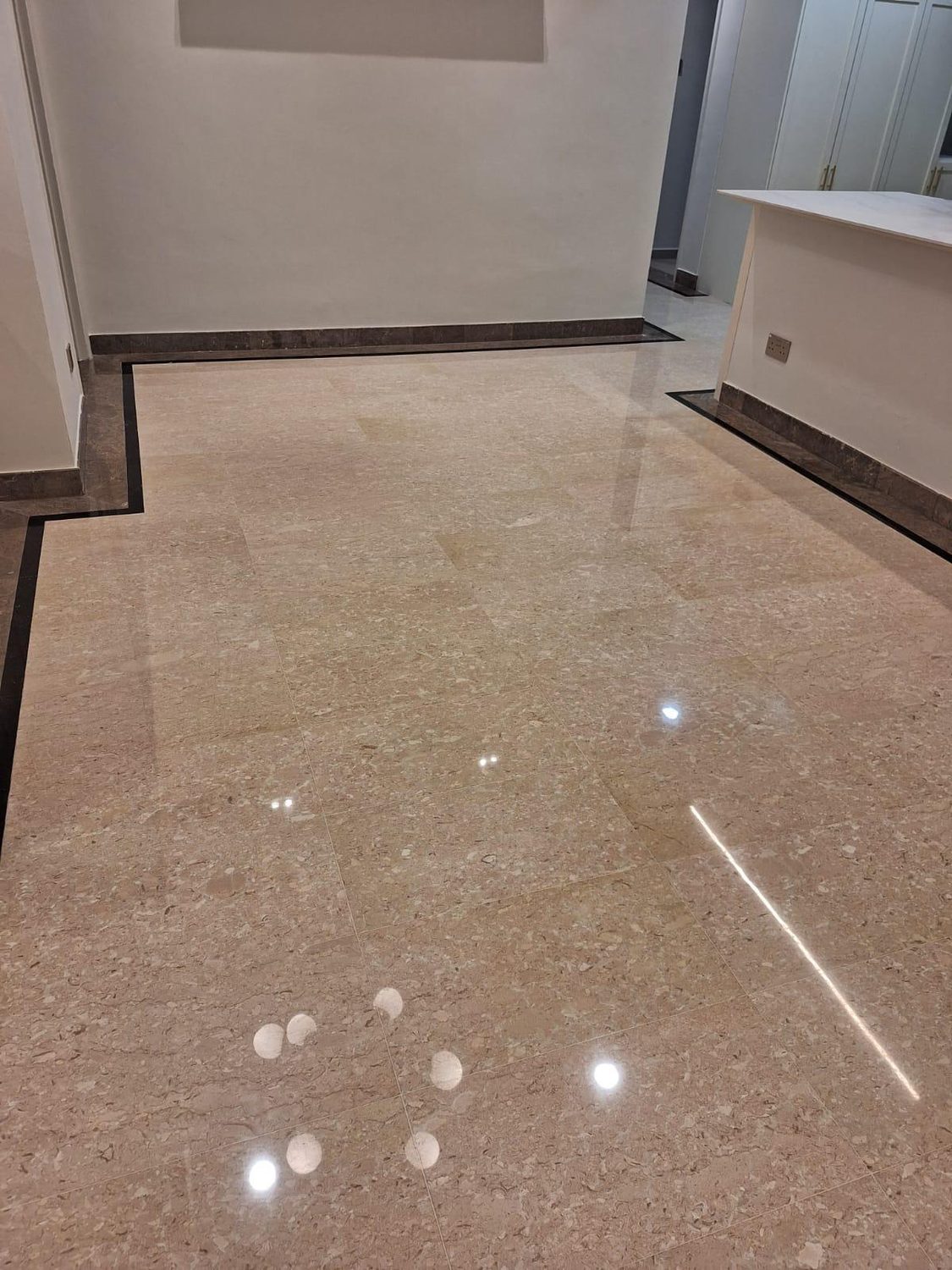
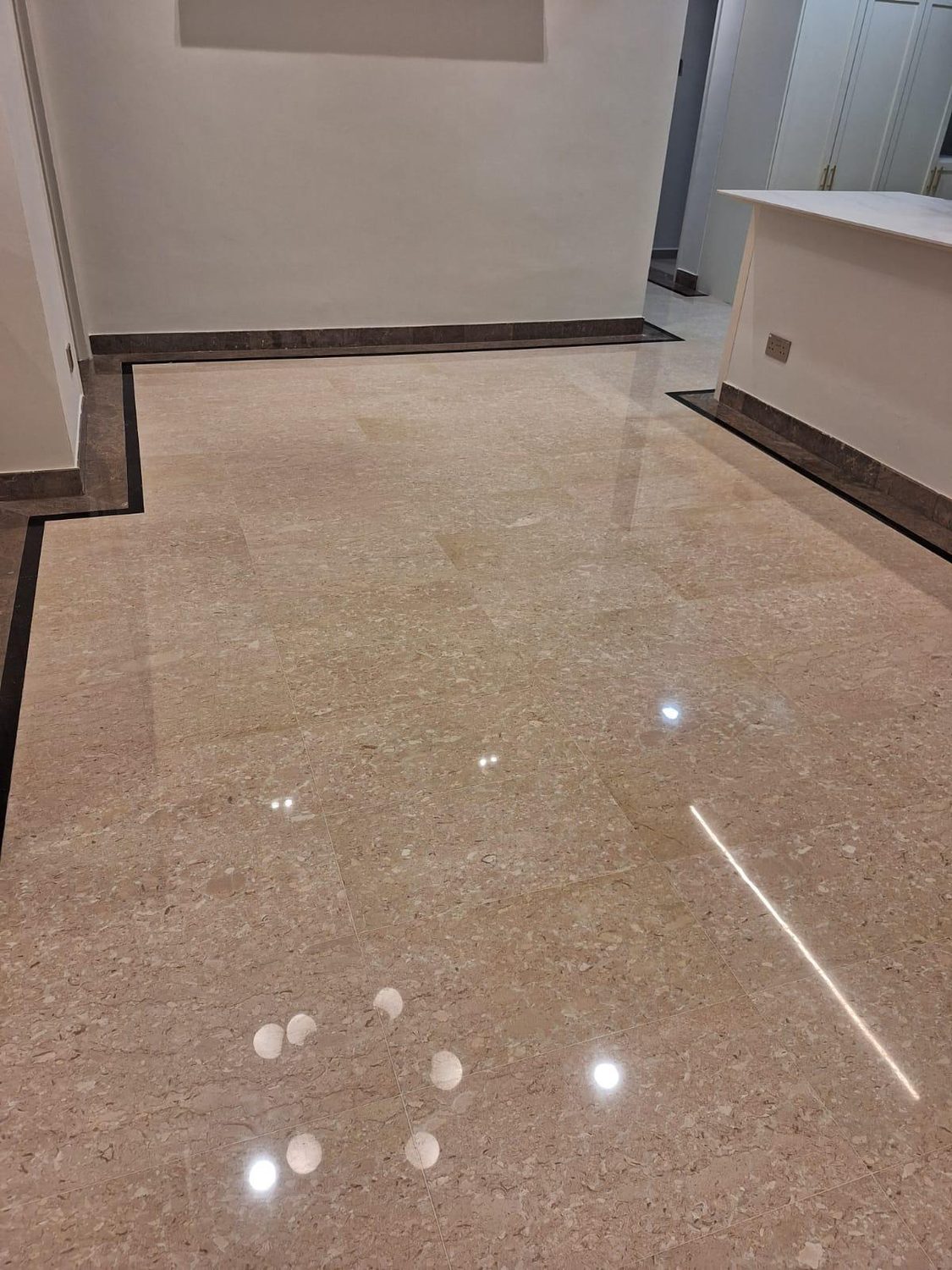
Marble loses its shine from foot traffic, mop chemicals, and surface etching. Diamond pads grind the dull layer off and bring the polish back from the stone itself.
Visible scratch lines from furniture drag, dropped objects, grit underfoot. Coarse pad cuts below the scratch depth, finer pads polish back up.
Hairline cracks on older marble surfaces. Colour-matched epoxy filler before the polish pass — the line becomes nearly invisible.
We send the full fixed number after we see your form — shaped by four things, never topped up on the day.
Marble polishing is a professional restoration process that helps restore the shine, smoothness, and appearance of natural marble surfaces.
Over time, marble floors can become dull, scratched, stained, or worn due to daily foot traffic, cleaning chemicals, and general usage.
Professional marble polishing helps improve the appearance of the marble and restore its natural elegance.
Marble floors can become dull due to:
Over time, these factors gradually wear down the polished surface of the marble.
Regular cleaning removes surface dirt, dust, and debris.
Marble polishing is a restoration process that improves the marble surface itself by reducing dullness, light scratches, etching, and surface imperfections while restoring shine.
Cleaning alone cannot restore worn marble surfaces.
In many cases, professional marble polishing can significantly improve the shine and appearance of marble surfaces.
The final results depend on factors such as:
Light surface scratches can often be significantly improved during the polishing process.
However, deep scratches, chips, cracks, and structural damage may require additional restoration work before polishing.
Many surface stains can be improved during the restoration process.
However, permanent staining that has deeply penetrated the marble may not be completely removable.
Results vary depending on:
The recommended frequency depends on:
As a general guide:
Regular maintenance helps preserve the appearance of marble flooring.
Yes.
Many older marble floors can be significantly improved through professional restoration and polishing.
Even marble that appears dull, worn, or aged may benefit from polishing, depending on its condition.
Marble polishing can be performed on:
A site assessment helps determine the most suitable treatment.
The duration depends on:
Most residential projects can be completed within one day, although larger properties may require additional time.
Professional marble polishing equipment is designed to minimise disruption during the restoration process.
Any necessary preparation and clean-up will be carried out as part of the service.
This depends on the restoration method used.
Specific recommendations regarding drying time and usage will be provided after the service is completed.
A properly polished marble surface should not necessarily be more slippery than a well-maintained marble floor.
Factors such as moisture, cleaning products, and footwear can influence slip resistance.
Etching occurs when acidic substances react with marble surfaces and leave dull marks.
Professional polishing can often improve or remove light etching depending on the severity of the damage.
Common causes include:
Marble is a natural stone that is sensitive to acidic substances.
To maintain marble flooring:
Proper care helps preserve the polished finish for longer.
In many cases, yes.
Professional marble restoration can improve the appearance of dull, scratched, stained, and worn marble without requiring full replacement.
A site assessment can determine whether restoration is suitable.
The cost depends on:
For an accurate quotation, homeowners are encouraged to provide photographs and measurements of the affected areas.
Marble is a natural stone that requires specialised restoration techniques and equipment.
Professional marble polishing helps:
Proper restoration helps preserve the beauty and value of marble surfaces.
Not necessarily.
Many marble floors that appear worn, dull, or aged can be restored through professional polishing and restoration services.
Restoration is often significantly more cost-effective than replacing the entire marble floor.
Professional marble polishing can dramatically improve the appearance of marble surfaces by restoring shine, reducing surface imperfections, and enhancing the natural beauty of the stone.
The extent of improvement depends on the marble's existing condition.
Mopping removes surface dirt but cannot repair wear, scratches, etching, or loss of shine within the marble surface itself.
Professional marble polishing addresses the stone surface directly and restores its appearance beyond what regular cleaning can achieve.
Many homeowners choose marble polishing because it can restore the appearance of marble flooring without the high cost and disruption of replacing the stone.
Polishing is often a practical way to refresh and maintain marble surfaces while extending their lifespan.
Uneven shine can occur due to differences in foot traffic, wear patterns, previous repairs, sunlight exposure, or inconsistent maintenance. Professional marble polishing helps create a more uniform appearance across the marble surface and restores a consistent level of shine.
Send us photos of the marble. We send full scope and fixed price to your WhatsApp.