Strip old varnish
Coarse-grit sand (40–60) pulls the old varnish layer off. Edge sander goes around skirting and corners where the drum sander can't reach.

Sand back to bare timber, fill the gaps, recoat. Sealer coat to bond, then one finish coat in your pick of matte, satin, or gloss. Furniture moved by us — not you.



Tell us the floor area and condition. Fixed price to your WhatsApp.



A few of our 4.8★ reviews from Singapore homeowners and businesses.
"Not only on time (an hour earlier than the slot) but very thorough. They took the time to explain what and how they worked, and contacted me in advance for the final checks."
Google review
"Friendly and efficient, explained some of the procedures and assisted in shifting furniture around. Will engage them again if needed."
Google review
"Great work and completed within the expected hours. They took care of all the smallest details and highlighted things that needed fixing."
Google review
Sanded back to bare timber, then one finish coat — no shortcuts, no over-coating. We tell you exactly what your floor needs.
Sequence matters — sanding wet parquet rips fibres; varnishing dusty parquet traps grit forever.
Coarse-grit sand (40–60) pulls the old varnish layer off. Edge sander goes around skirting and corners where the drum sander can't reach.
Medium (80–100) then fine (120–150) sand passes flatten the timber surface. Gap-filler into cracked boards, colour-matched. Sanded flush.
Industrial vacuum + tack cloth so no dust gets trapped. Sealer / base coat bonds to bare timber and primes for the finish coat.
A single finish coat goes on over the primed timber — your pick of matte, satin, or gloss. Full cure time given before furniture goes back.
Scratches, sun fade, surface wear. Each gets a different sand depth — we don't over-sand.
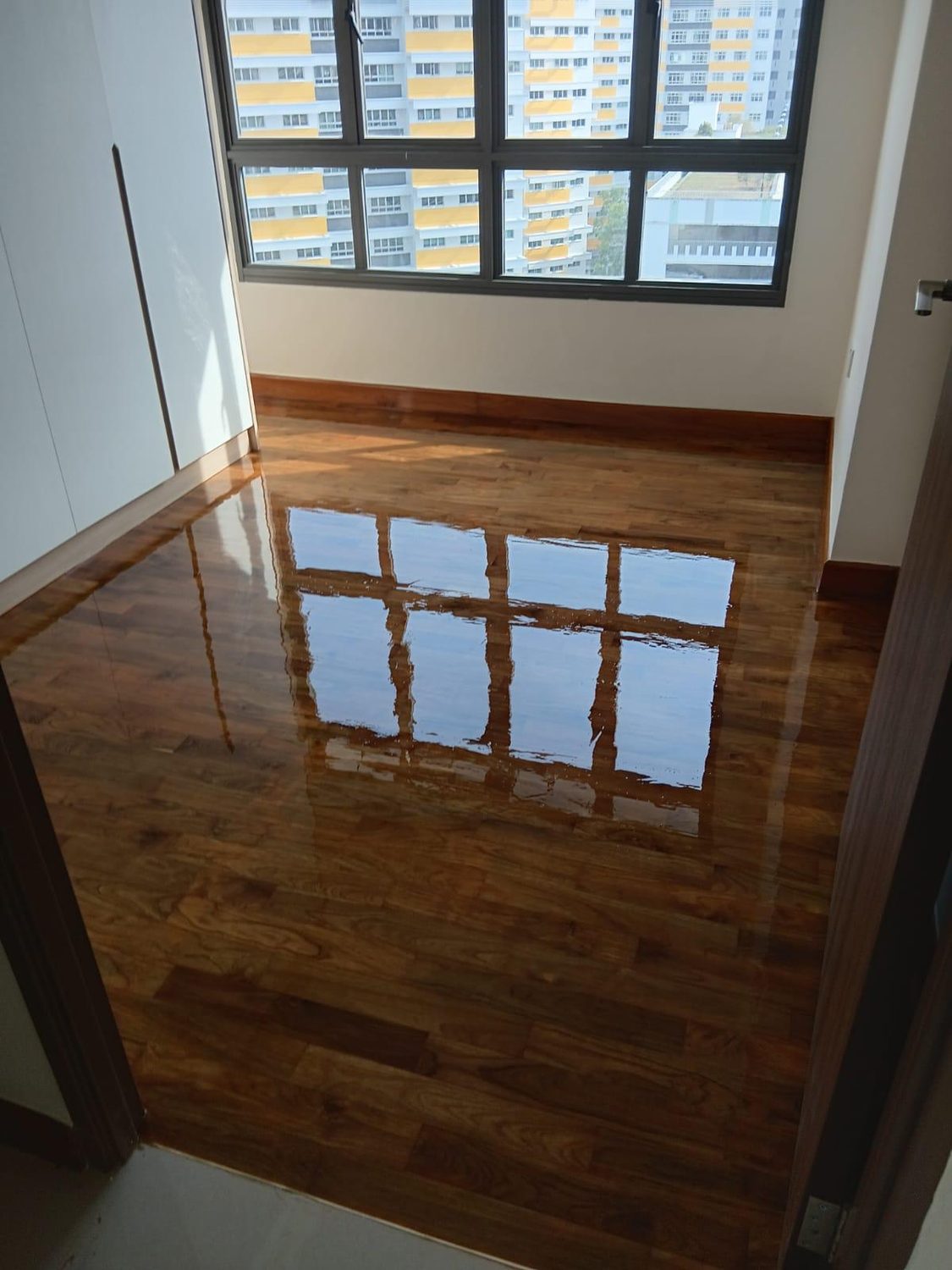
Foot traffic + UV slowly strip the varnish gloss. A light sand and one fresh finish coat restores the protective layer.
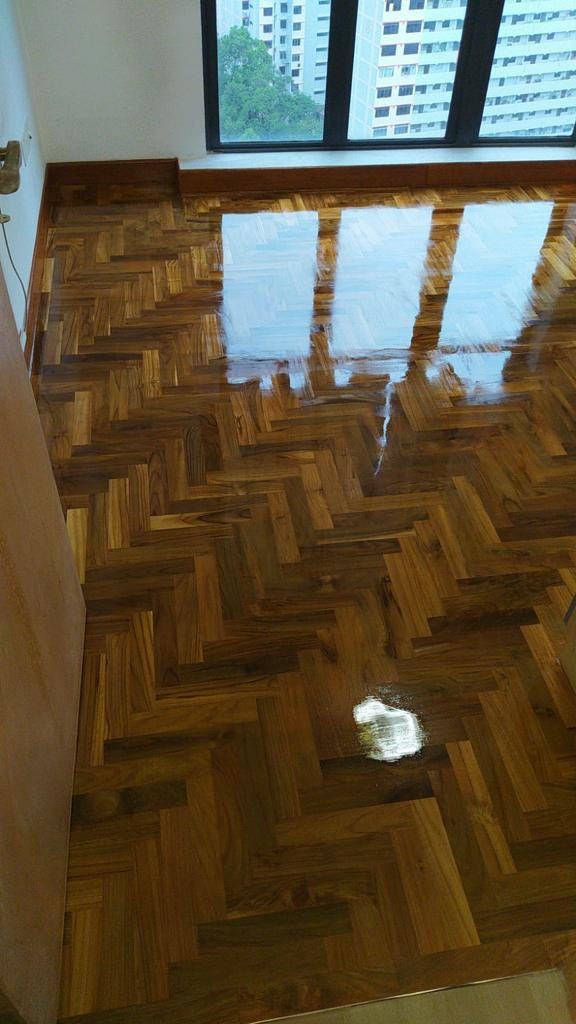
Furniture drag, pet claws, dropped objects. Coarse-to-fine sand pass removes the damage layer, then a fresh finish coat goes back over the bare timber.
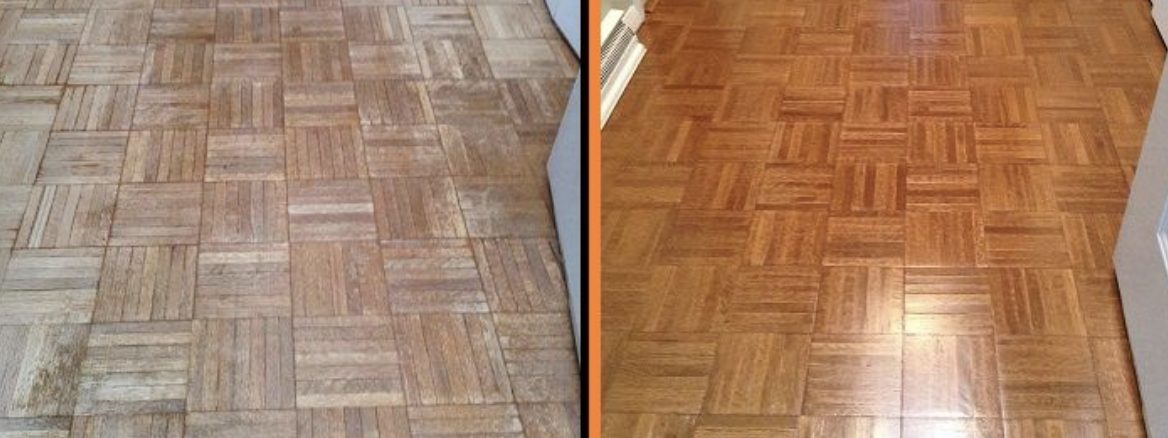
UV bleaches exposed parquet — you see lighter patches where the sun hits. Sanding back to bare timber evens the tone before varnish goes on.
We send the full fixed number after we see your form — shaped by four things, never topped up on the day.
Parquet varnishing is a floor restoration process that involves sanding the surface of the parquet flooring and applying protective varnish coatings to restore its appearance and protect the wood.
Over time, parquet floors can become dull, scratched, faded, or worn due to daily foot traffic and ageing. Varnishing helps rejuvenate the floor while enhancing its durability and appearance.
Parquet flooring can lose its shine due to:
As the protective coating wears down, the floor may gradually appear dull and lifeless.
Common signs include:
If the protective coating has deteriorated significantly, professional varnishing may be recommended.
Light to moderate surface scratches can often be significantly improved through sanding and varnishing.
Deep gouges, severe damage, or missing wood sections may require additional repair work before the varnishing process.
Yes.
Many old parquet floors can be restored through professional sanding and varnishing.
Floors that appear worn, faded, or aged may often be revitalised without requiring complete replacement.
The lifespan of parquet varnish depends on factors such as:
With proper care, parquet varnish can last for many years before requiring restoration.
The frequency depends on the floor's condition and usage.
As a general guide:
Regular care helps extend the lifespan of the flooring and varnish.
The process generally involves:
The exact process may vary depending on the floor condition and restoration requirements.
In most restoration projects, sanding is performed to remove the worn surface layer, scratches, stains, and old varnish before new coatings are applied.
Sanding helps achieve a smoother and more uniform finish.
Professional parquet restoration equipment is designed to minimise dust and disruption during the sanding process.
Preparation and clean-up procedures are carried out to help maintain a cleaner work environment.
The duration depends on:
Most residential projects can be completed within a few days, although curing time may be required before full use.
Drying and curing times vary depending on:
Specific recommendations regarding floor usage will be provided after the work is completed.
Light foot traffic may be permitted after the recommended drying period.
However, heavy furniture placement and full usage should only resume after the varnish has fully cured.
The exact timing depends on the varnish system used.
The final appearance depends on:
Some varnishes may slightly enhance or deepen the natural colour and grain of the wood.
Common parquet finishes include:
The most suitable finish depends on the homeowner's aesthetic preferences and maintenance requirements.
Minor water damage may sometimes be improved through restoration.
However, severe water damage, warping, swelling, or structural deterioration may require additional repairs or replacement of affected sections.
A site assessment is recommended.
Parquet flooring may lift due to:
The root cause should be addressed before restoration work is carried out.
In many cases, restoring existing parquet flooring through sanding and varnishing is significantly more cost-effective than removing and replacing the entire floor.
Restoration also avoids the disruption associated with full floor replacement.
The cost depends on:
For an accurate quotation, homeowners are encouraged to provide photographs and floor area measurements.
Parquet flooring is a natural wood product that requires specialised restoration techniques and equipment.
Professional restoration helps:
Proper restoration can significantly improve the look of ageing parquet flooring.
Not necessarily.
Many parquet floors that appear old, dull, or scratched can be restored through professional sanding and varnishing.
Restoration is often considerably more affordable than full floor replacement and can dramatically improve the floor's appearance.
Professional sanding and varnishing can significantly improve the appearance of parquet flooring by removing surface wear, restoring colour consistency, and enhancing the natural beauty of the wood.
Results depend on the condition and age of the flooring.
Mopping removes surface dirt but cannot restore worn varnish, scratches, or wood surface deterioration.
Professional parquet restoration addresses the flooring itself rather than simply cleaning the surface.
Many homeowners choose parquet varnishing because it can restore the beauty of existing wood flooring while avoiding the much higher cost of replacing the entire floor.
Varnishing also helps protect the wood and extend its usable lifespan.
Water-based varnish generally has lower odour, faster drying times, and less yellowing over time.
Oil-based varnish may provide a richer colour tone and can be highly durable, but often requires longer drying and curing times.
The most suitable option depends on the flooring condition, household needs, and desired finish.
Well-maintained parquet flooring can enhance the overall appearance of a property and create a cleaner, more premium impression for homeowners, guests, tenants, or potential buyers. Many property owners choose parquet restoration before selling, renting out, or moving into a property.
Send us photos of the parquet. We send full scope and fixed price to your WhatsApp.
Part of our Floor Restoration range — one in-house crew, one fixed price across every service.